Piyush Ratnu Cyber | Blockchain | Data Forensics & Security
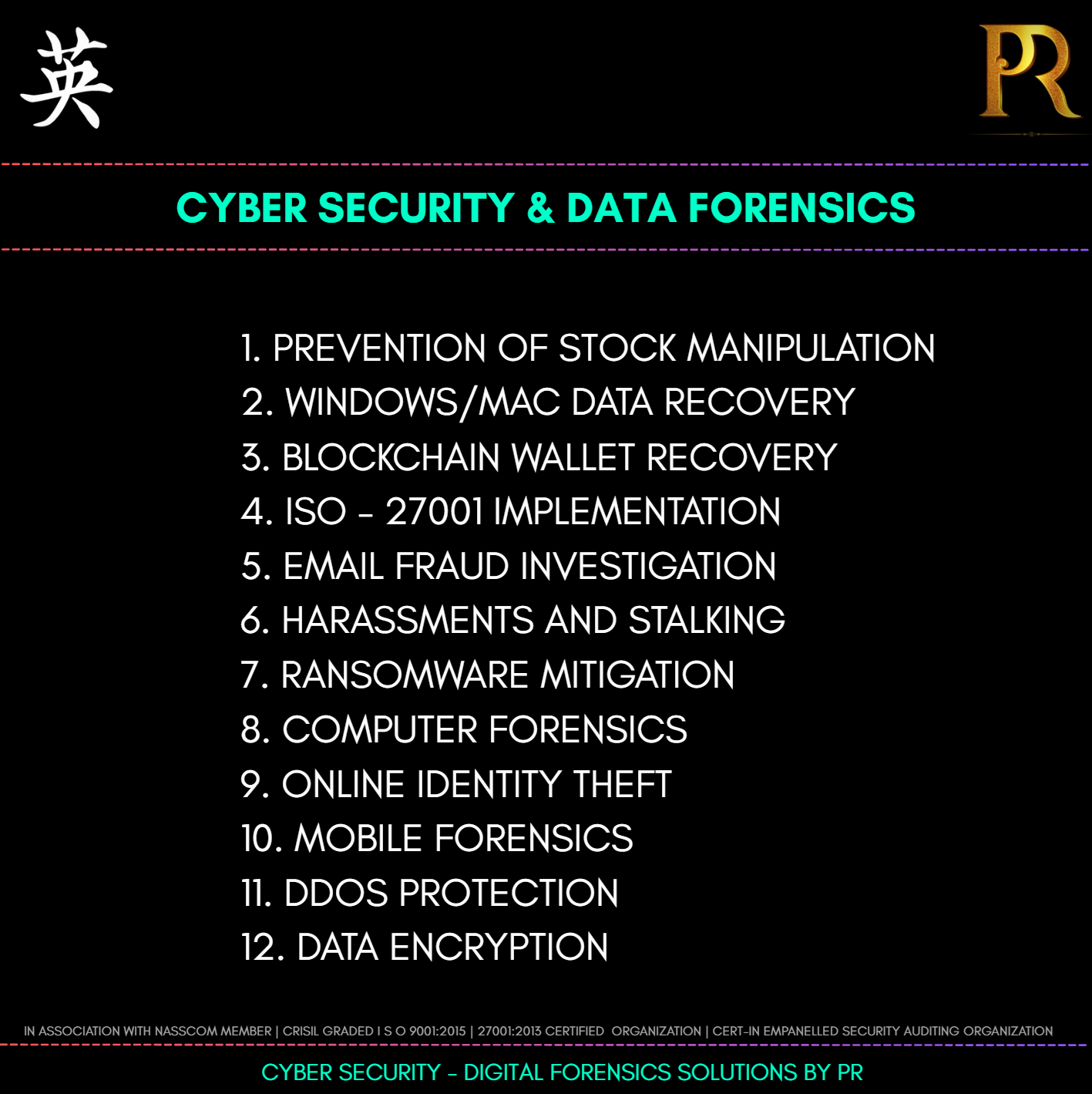
Cybersecurity and data forensics are closely related but focus on different stages of protecting and investigating digital systems. Both are vital for safeguarding information and responding to threats. Here’s why they’re important:
1. Importance of Cybersecurity
Cybersecurity is the practice of protecting systems, networks, and data from unauthorized access, theft, damage, or disruption.
Key reasons it’s important:
-
Protects sensitive data – Prevents personal, financial, and business information from being stolen or misused.
-
Prevents financial loss – Cyberattacks can cause costly downtime, ransom payments, and legal liabilities.
-
Maintains trust – Customers and partners expect secure handling of their information.
-
Ensures business continuity – Security measures keep critical systems running even under attack.
-
Protects national security – Governments and critical infrastructure rely on strong cybersecurity to prevent sabotage or espionage.
Examples of cybersecurity in action: Firewalls, intrusion detection systems, encryption, multi-factor authentication, and regular security updates.
2. Importance of Data Forensics
Data (or digital) forensics is the process of identifying, preserving, analyzing, and presenting digital evidence for legal or investigative purposes.
Key reasons it’s important:
-
Investigates cybercrimes – Helps track down hackers, fraudsters, and malicious insiders.
-
Preserves evidence – Ensures data is collected and stored in a legally admissible way.
-
Supports legal cases – Provides courts with clear, verifiable proof of wrongdoing.
-
Finds the root cause of incidents – Determines how a breach happened to prevent recurrence.
-
Protects organizational reputation – Transparent investigations show due diligence after incidents.
Examples of data forensics in action: Recovering deleted files, tracing IP addresses, analyzing log files, and examining compromised devices.
3. How They Work Together
-
Cybersecurity is like locking your doors and installing alarms.
-
Data forensics is what happens when a break-in occurs — investigators check how the intruder got in, what they took, and who did it.
-
Together, they create a complete security cycle: Prevention → Detection → Investigation → Remediation.